Who funds innovation?
17th of September, 2026
Europe innovates but does not scale: the IPI and SpainCap conference puts Barcelona and Catalonia before the challenge of becoming a "scale up region"
Barcelona, an international benchmark in startup creation, has the opportunity to go a step further and turn itself into a genuine "scale up region" — that is, an area that supports innovative companies as they scale up so they can make the leap to the global market. The aim is to join Europe’s innovation first division alongside cities such as Paris and Berlin. The gap to be closed is captured in a single figure: venture capital investment amounts to around 1% of GDP in the United States; in the European Union, barely 0.2%.
The idea was set out during the conference organised by Iniciativa para la Productividad y la Innovación (IPI), the Cercle d’Economia’s think tank, together with SpainCap, which brought together the main public and private players financing innovation in Catalonia, Spain and Europe. The diagnosis was unanimous: Europe innovates, but it does not scale.
Scalability, Europe’s great unfinished business
Teresa Garcia-Milà, president of the Cercle, opened the conference with a basic question: "Is it capital that is missing, or big projects?" She pointed out that the problem is that European innovation does not scale: we create companies, but very few become global players. Catalonia accounts for around 25% of Spain’s R&D spending, and Barcelona is one of Europe’s leading entrepreneurship hubs. "But scalability remains our unfinished business," she said.
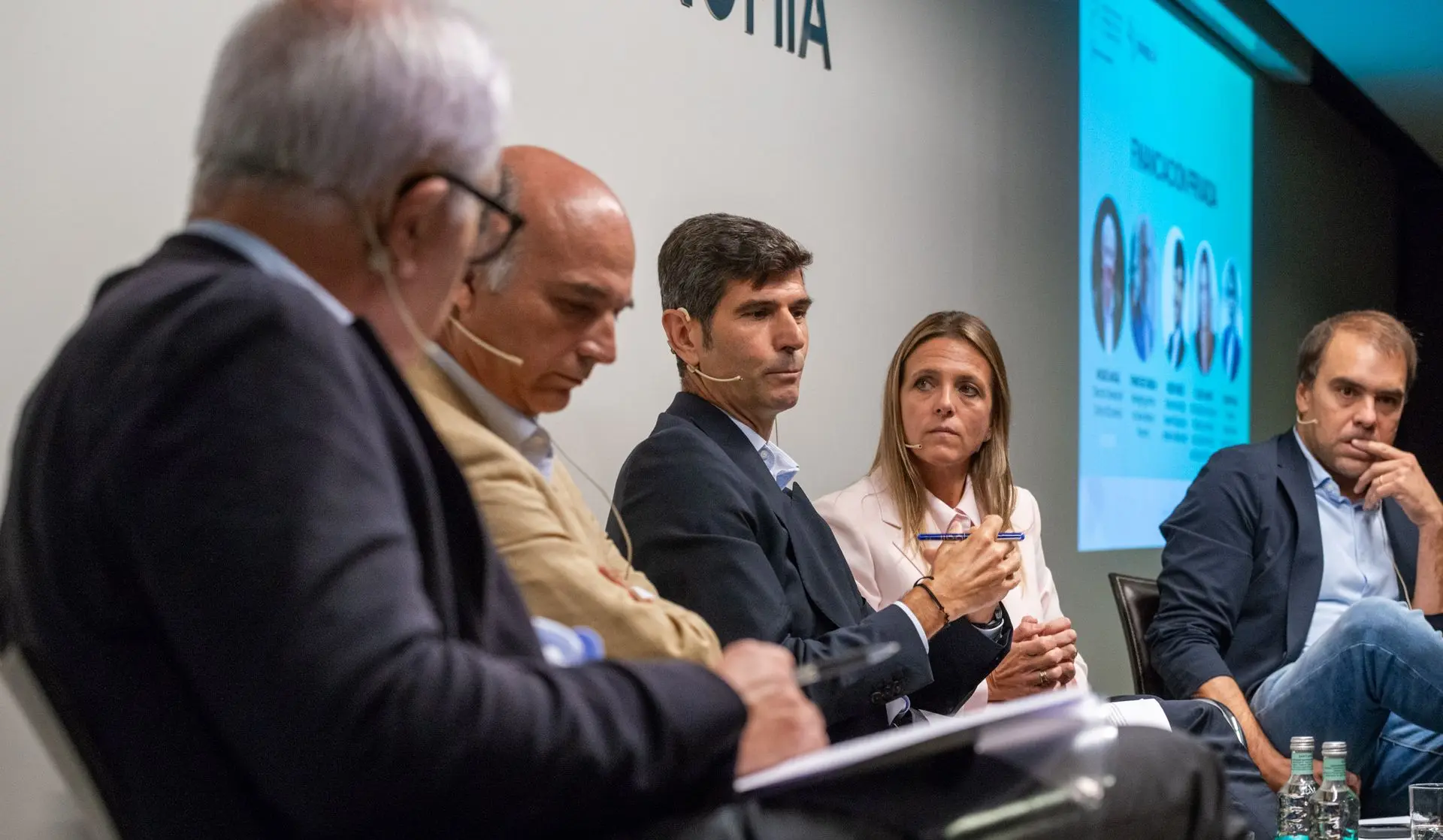
For his part, Enrique Tombas, president of SpainCap, recalled that Spain mobilised €3.3 billion in private capital in the first half of the year, but underlined the critical gap: "We know how to support companies when they are crawling, but not when they are walking." Many Catalan and Spanish startups turn to US investors in order to grow. Tombas called for an incentive architecture that would allow European citizens’ savings to shift out of bank deposits, which yield almost nothing, and into funds that invest in innovation.
Coordinating public capital to gain scale
The first round table, moderated by SpainCap’s director general, José Zudaire, focused on public funding and featured representatives of some of the main public institutions financing innovation at European, Spanish and Catalan level.
María Romano, head of the Grupo BEI office in Spain, said that "Spain has a dynamic innovation ecosystem that is a benchmark in Europe", adding that "Catalonia is a clear example of this ecosystem, and the Grupo BEI is one of the major financers of its development, as reflected in our support for innovation in the region, which spans everything from research and entrepreneurship to global scale-up". Romano noted that "it is at this business scale-up stage that we need to redouble our efforts, so that our highest-potential companies can access the capital they need to grow and compete globally from Europe". To meet this need, the Grupo BEI has just launched the second phase of its European Tech Champions initiative, ETCI 2.0 — a €15 billion fund of funds with which it expects to mobilise up to €80 billion in public and private investment, thereby helping to close the funding gap facing European scale ups.
Vanessa Servera, chief executive of the Institut Català de Finances (ICF), recalled that Catalonia is a scientific powerhouse and a European hub in health, but acknowledged that technology transfer remains fragmented. "Barcelona must be a scale up city. Size matters; atomisation is a brake," she said.
The directors general of COFIDES, AXIS ICO and CDTI agreed that the difficulties lie in the early stages and in the scale-up stages, and that European strategic autonomy depends on closing that gap.
José Moisés Martín, director general of CDTI, summed it up as follows: "We have two valleys of death: technology transfer and scaling up. To grow you have to sell, and the single market is key." He announced that CDTI wants to concentrate on deeptech, where it acts as secretariat, and has launched a €350 million instrument to finance spin offs and laboratory projects requiring only 15% private contribution.
Miguel Tiana, director general of COFIDES, recalled that the state-owned company works along three lines — green transition, digital transition and innovation — and that its mission is to attract foreign investment, drive internationalisation and mobilise social impact funds. He stressed that the greatest difficulties lie in the early stages and in scaling up, where European strategic autonomy and shared value chains carry ever more weight.
Guillermo Jiménez, director general of AXIS-ICO, highlighted that they manage more than €9 billion and operate across all sectors through public-private collaboration, with a call open all year round in 2026. He also noted that public investors have succeeded in attracting a great deal of private capital, and that the challenge now is to adjust the market so that each player specialises in what it does best, strengthening coordination.
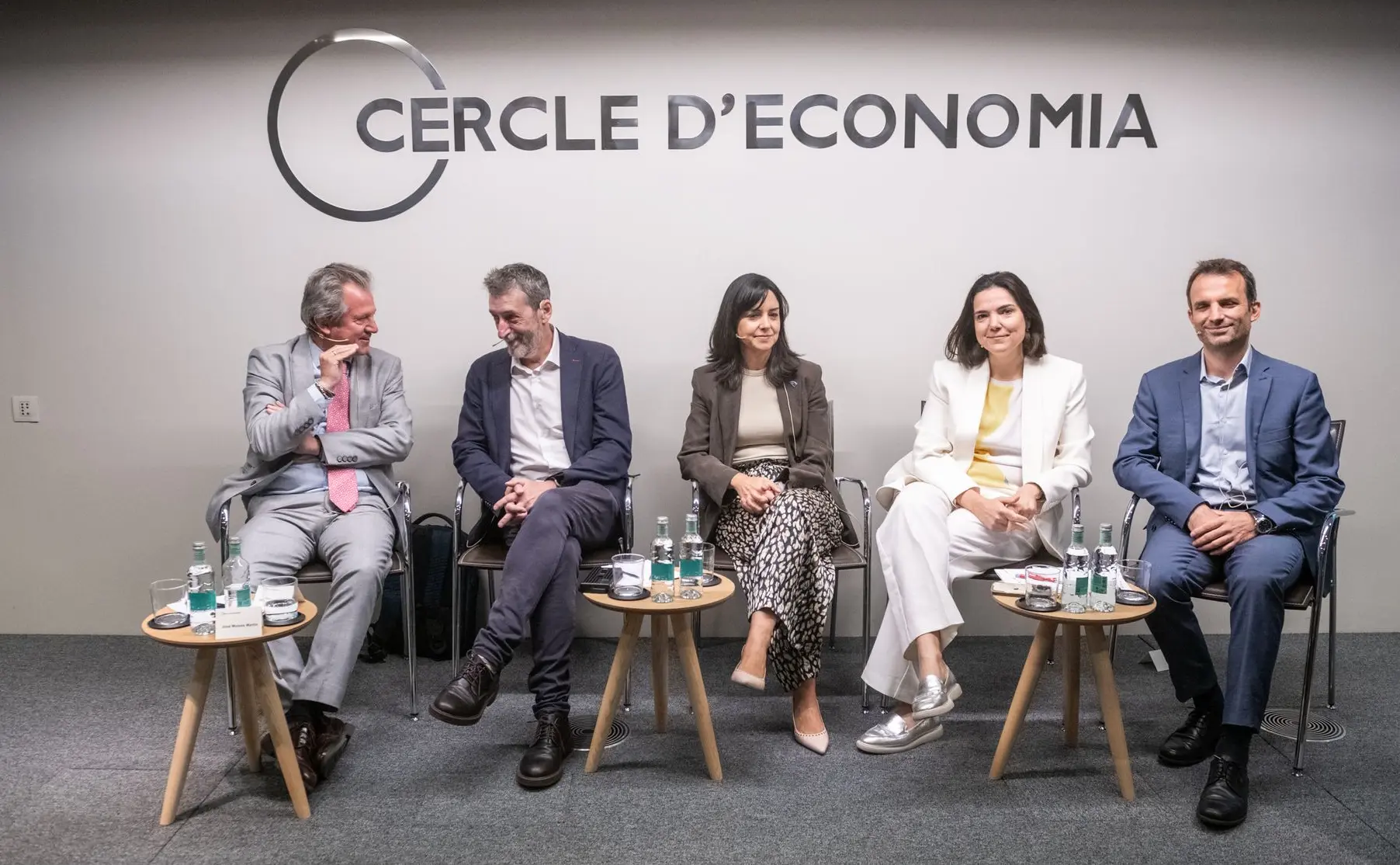
The private capital view: more market, less fragmentation
The second panel brought together much of the diversity of private funding, to consider what would be needed — including in regulatory and liquidity terms — for financing to stop being a limiting factor. The Cercle d’Economia’s director general, Miquel Nadal, moderated the discussion.
Francisco Badia, managing partner of Grow Venture Partners, framed the debate in deeptech terms. "Investment in the United States is fifteen times higher than in Europe." He pointed to the fragmentation of the European market, where every country wants its own "national champion" — in quantum computing, for example. Badia stressed that 75% of the capital financing innovation in Europe is public or quasi-public: "What matters is that this money operates on private criteria, seeking returns."
Clara Campàs, co-founder of Asabys Partners, added that in health "what is missing is capital", even though Barcelona attracts global talent. She recalled that artificial intelligence has drained investment worldwide and that Europe must avoid repeating mistakes as it places the emphasis on its sovereignty in defence. "Let’s not just build tanks," she said.
Roger Piqué, founder of Inveready, focused on liquidity: "In scaling up, the problem is the lack of liquidity — in the United States too." He noted that Europe is still not an integrated market and that execution will matter more and more than product: "AI gives you scalability in execution."
Sergi Farró, head of High Growth Catalunya at Banco Santander, offered a surprising data point: "We have excess liquidity and funds with the BEI that we cannot use up in a year." He underlined the importance of venture debt and financial discipline: "A startup must be obsessed with being profitable."
The scale ups speak: quantum, software and photonics from Barcelona
In the final session of the conference, moderated by Xavier Vives, chair of the advisory board of the Cercle’s Iniciativa para la Productividad y la Innovación (IPI), companies shared their experience of combining public and private funding.
Marta P. Estarellas, CEO of Qilimanjaro Quantum Tech, explained that the company is already developing quantum computers from Barcelona: "We have been 80 people since 2019. We want to move into scaling up quantum data processing: more sustainable, faster." Those leading quantum computing in the United States and in the Trump administration "are Spanish", she noted. "I left too, but quality of life and European values are a strong reason to come back," she added. The funding target is to reach €200 million over the coming years in order to compete with other European scale ups with similar levels of technology.
Marcel Queralt, Chief Partnerships Officer at Factorial, set out the company’s growth: "€150 million raised, €200 million in revenue. We want to reach €1 billion by 2030." Its focus: Europe, the United Kingdom, the United States, Mexico and Brazil. Factorial is a technology company specialising in people, finance and IT management software. In 2026 it completed a strategic transition to an AI-driven operations platform, used by 16,000 companies in more than 90 countries. It currently has 1,700 employees, 1,000 of them in Barcelona. It is one of Europe’s 20 most valuable scale ups, with a valuation of $2.5 billion following a $150 million Series D round led by General Catalyst, the US venture capital firm based in Cambridge, Massachusetts.
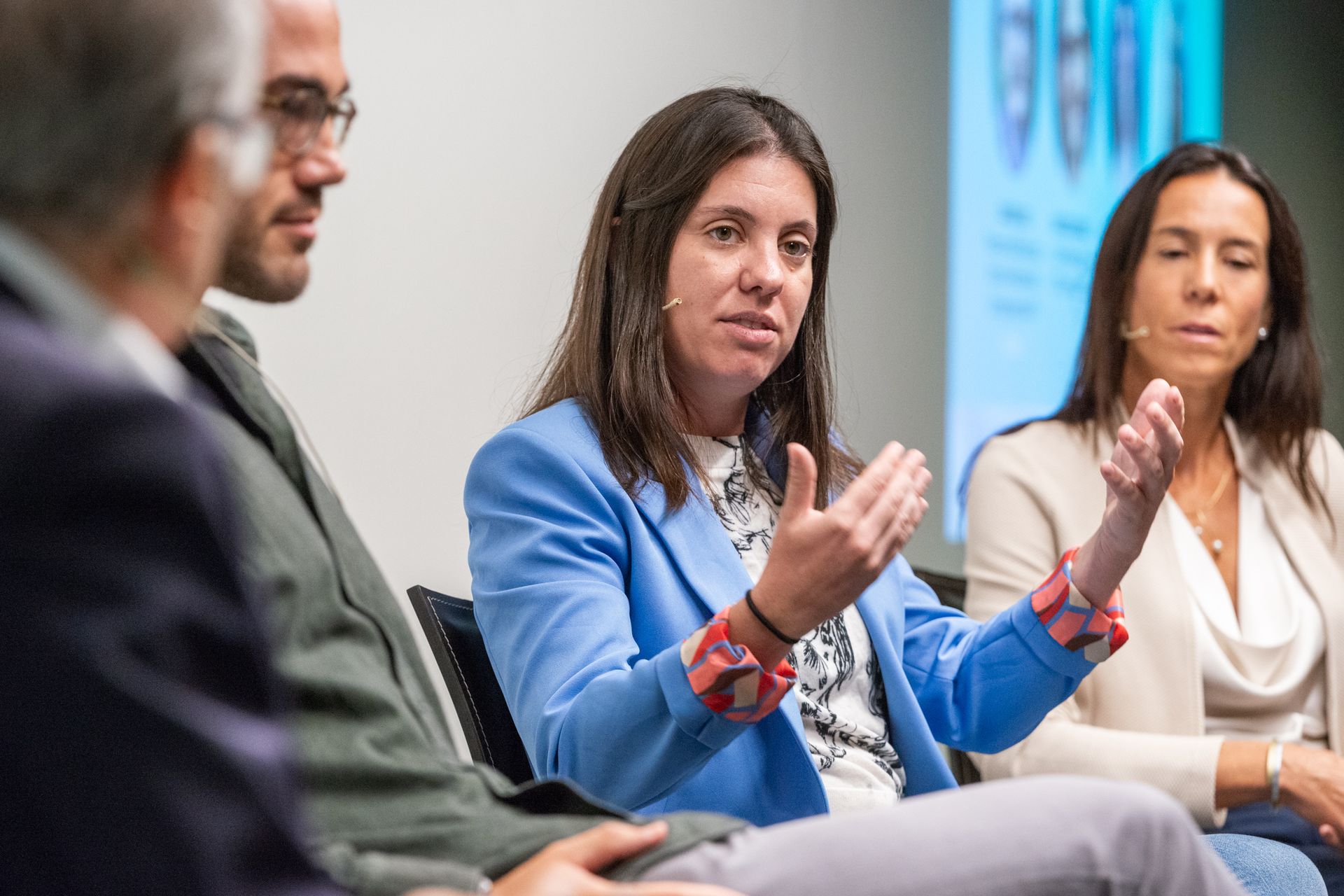
Anna Seriola, co-founder and CEO of Lumiris Spectral Solutions, added her company’s perspective: it aims to pioneer systems for analysing the physiology of living samples in real time and has a capital increase under way. Lumiris Spectral Solutions is a spin off of IBEC (Institut de Bioenginyeria de Catalunya) specialising in advanced optical technology for reproductive health. It is developing a spectroscopy-based device that makes it possible to analyse biological samples with far greater precision and speed than current techniques, with direct applications in fertility, diagnostics and personalised medicine. Lumiris has already received some €7 million in funding between equity rounds and public support, and is at the clinical validation stage for its solutions.
Among the points raised by the companies were the need to improve the tax treatment of stock options for employees of new companies, to improve training in intellectual property at universities, and to unify public procurement rules across Europe.